
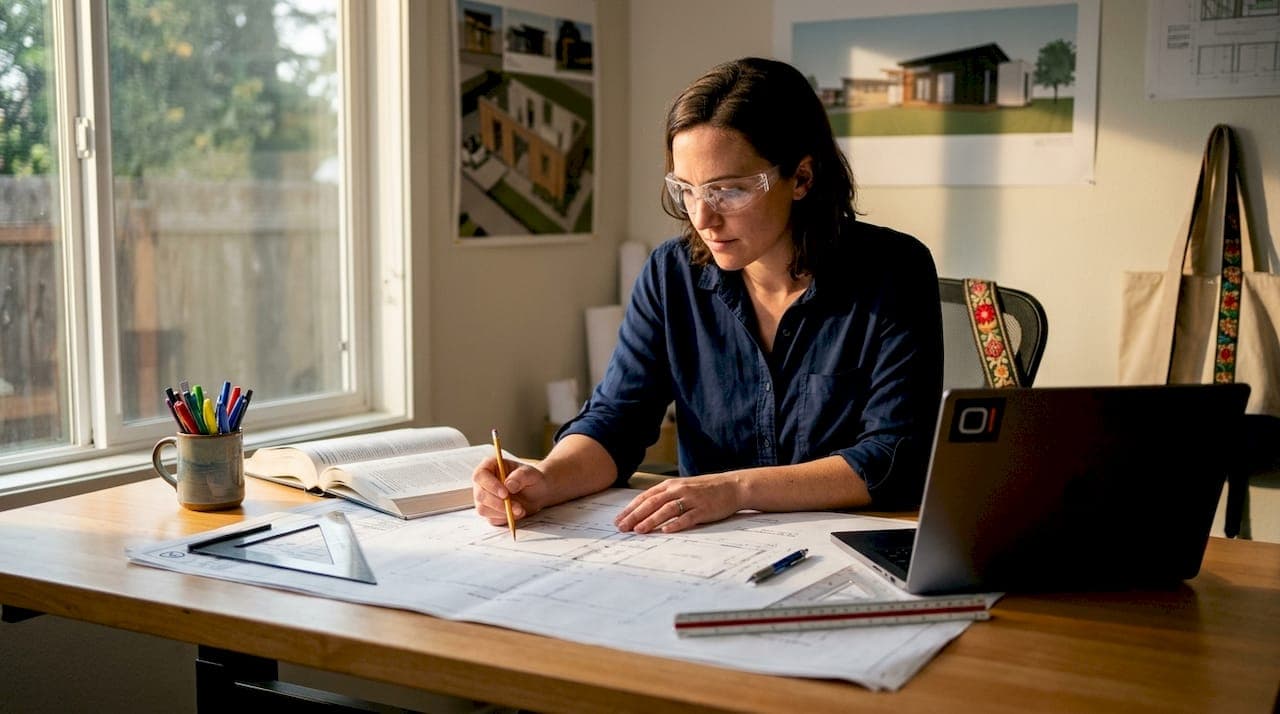
California ADU shear wall requirements are building code mandates that force accessory dwelling units to resist seismic lateral loads through engineered wood structural panel walls. The California Building Code (CBC), aligned with ASCE 7-22, classifies most California ADUs as Risk Category II structures in Seismic Design Category D, the most demanding residential classification. A licensed structural engineer must design and stamp the shear wall system before any local building department will approve your ADU permit. Getting this right from the start controls cost, prevents plan check rejections, and keeps your project on schedule.
What are the specific shear wall design criteria for California ADUs?
Shear walls are the primary lateral force-resisting system in wood-framed ADUs. They transfer seismic and wind forces from the roof and floor diaphragms down to the foundation through a continuous load path. The CBC sets specific, non-negotiable minimums for every component of that path.
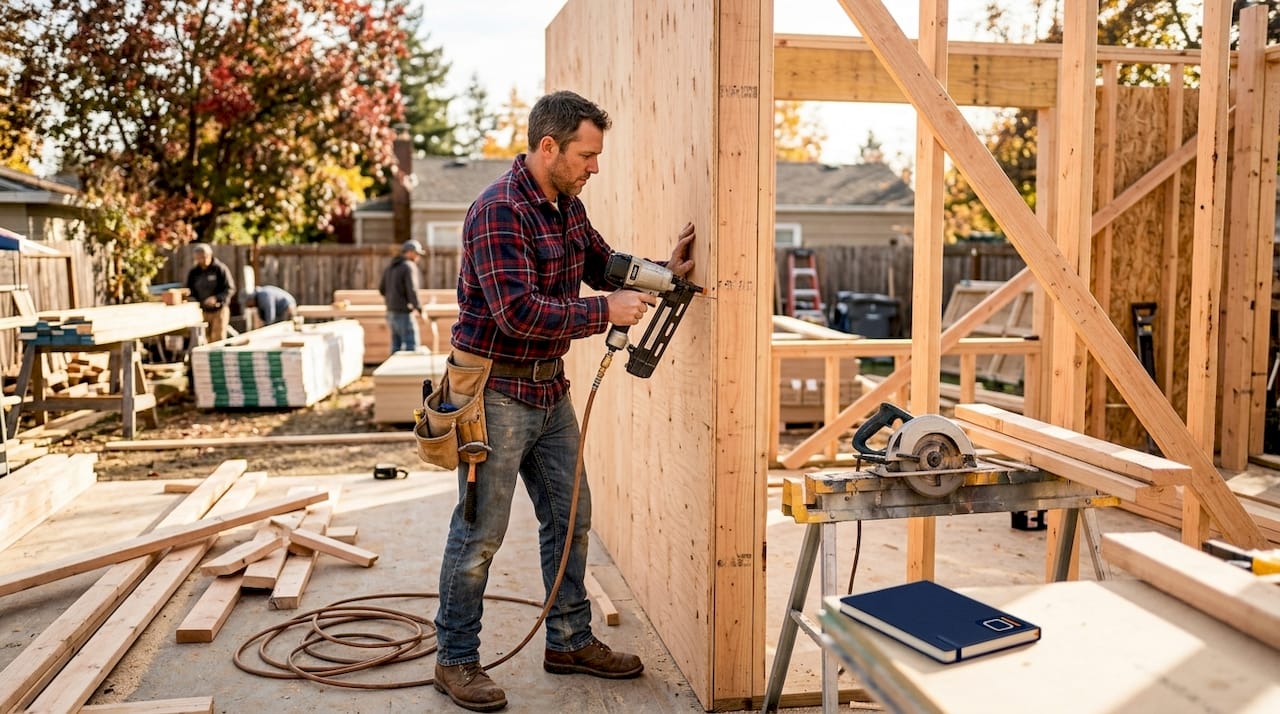
Core code requirements under CBC and ASCE 7-22
The 2025 CBC with ASCE 7-22 increased seismic coefficients by 10–25% compared to prior editions. That increase tightened nailing schedules and minimum segment lengths across the board. Key shear wall specifications include:
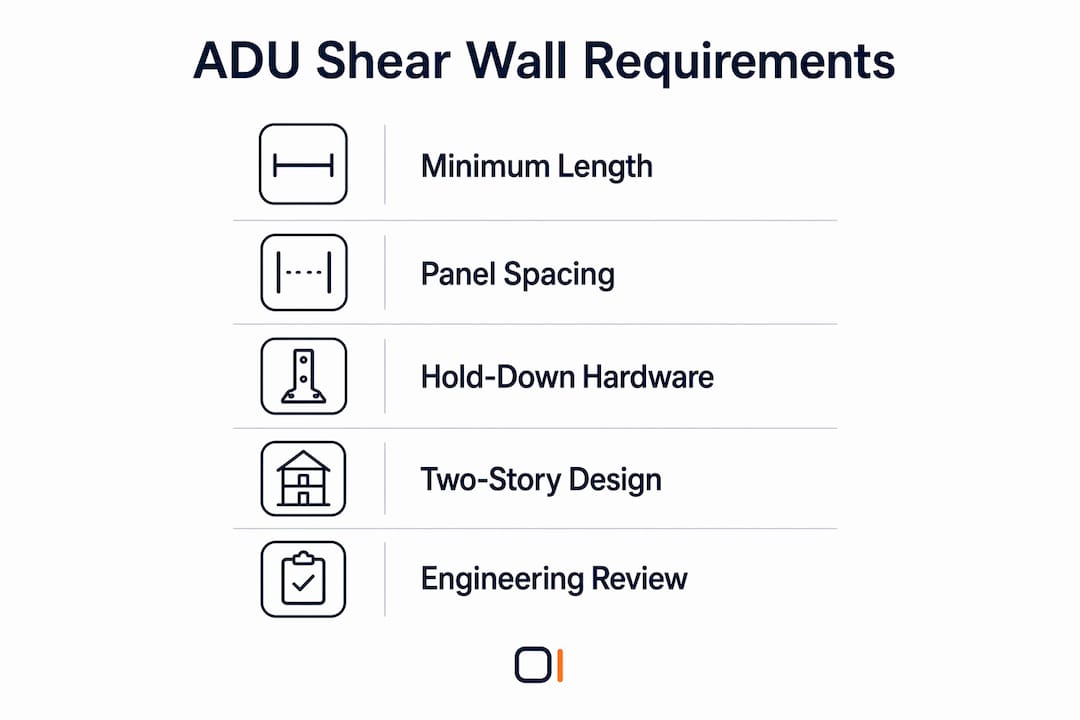
- Minimum segment length: 2 feet for a full-height shear wall panel, per CBC requirements for wood structural panel sheathing
- Maximum spacing: Shear walls must be spaced no more than twice the building width apart along each wall line
- Nailing schedules: Edge nailing at 2, 3, or 4 inches on center depending on the required unit shear demand
- Hold-down anchors: Must connect wood framing directly to the concrete foundation to prevent overturning during a seismic event
- Continuous load path: Every connection from roof sheathing to foundation anchor bolt must be detailed and verified
| Requirement | CBC Minimum |
|---|---|
| Shear wall segment length | 2 feet minimum |
| Panel spacing | Less than 2x building width |
| Nailing (high shear) | 2 inches on center at edges |
| Hold-down hardware | Required at each full-height segment end |
| Foundation anchorage | Anchor bolts per engineered schedule |
Two-story ADUs face a notably harder design challenge. Two-story California ADUs incur a 15–25% cost premium because higher seismic coefficients demand extended hold-down hardware and more shear wall length at the first story. The first-story walls carry accumulated loads from both floors, so segment lengths and nailing schedules are more demanding than in a single-story unit.
Pro Tip: Request a full-height segment design review from your engineer before finalizing window and door locations. Moving an opening 12 inches can add or remove an entire shear wall segment.
How does structural engineering involvement affect ADU permit approval?
A licensed structural engineer is not optional for California ADU shear wall design in Seismic Design Category D. The engineer of record (EOR) carries legal responsibility for the lateral system and must produce a complete, stamped package before plan check submission.
The EOR's core deliverables include:
- Shear wall calculations: Demand vs. capacity analysis for each wall line, organized by story
- Nailing and hold-down schedules: Specific hardware specifications tied to each wall segment on the plans
- Foundation anchorage details: Anchor bolt size, spacing, and embedment depth for each shear wall location
- Diaphragm design: Roof and floor sheathing nailing to transfer lateral loads to the shear walls
- Structural observations: On-site visits at framing milestones to confirm construction matches the stamped plans
Structural observations are mandatory in many California jurisdictions. Without a logged observation report at the framing stage, the building department can withhold the final occupancy permit indefinitely. That single oversight can stall a project for weeks.
Structural engineering costs for ADU shear wall packages range from $1,500 to $4,000 depending on project complexity. That fee is a fraction of the cost of a plan check rejection, a redesign, or a construction correction after framing is complete. Detailed engineering upfront reduces plan check cycles and lowers total project cost.
Pro Tip: Ask your engineer to provide the california structural engineering report format your local jurisdiction prefers. Some counties require specific calculation formats or cover sheets that differ from standard practice.
What practical design factors affect shear wall placement in California ADUs?
Architectural decisions and site conditions directly control how much shear wall you can fit into an ADU floor plan. Ignoring these factors early creates expensive problems at plan check.
Openings and architectural constraints
Large windows or sliding doors reduce available shear wall length along a wall line. When openings consume too much of a wall, the remaining segments may not meet the minimum 2-foot length or may not provide enough total shear capacity. The two main alternatives are:
- Steel moment frames: Placed at large openings to carry lateral loads without requiring wall length. These add cost and require their own engineering.
- High-performance sheathing: Products with higher unit shear ratings allow shorter segments to carry the same load, preserving more architectural flexibility.
Shear wall layout is an architectural decision as much as a structural one. Engineers who get involved after the floor plan is locked spend most of their time working around problems that a 30-minute early coordination meeting would have prevented. The best ADU projects treat shear wall placement as a design constraint from day one, not a correction applied at the end.
Site conditions and seismicity
Complex soil conditions such as expansive soils or liquefaction-prone areas increase foundation and anchorage demands for shear walls. Coastal California locations may also add wind load requirements on top of seismic demands. Site-specific seismic coefficients vary by location, and off-the-shelf ADU plans that ignore local SDC classifications frequently result in rejected permit applications. Your engineer must run a site-specific seismic hazard analysis using the USGS ground motion tool or equivalent before finalizing the shear wall design.
Pro Tip: Provide your engineer with a geotechnical report if one exists for your site. Soil data changes foundation anchorage requirements and can affect shear wall hold-down sizing significantly.
What are common plan review challenges for ADU shear wall permits?
Plan reviewers in California focus on a predictable set of shear wall details. Knowing what they look for lets you submit a cleaner package and avoid the most common rejection triggers.
Plan reviewers scrutinize the continuous load path from roof to foundation above all else. A missing strap between the roof diaphragm and the top plate, or an unspecified hold-down at a shear wall end, will generate a correction notice every time. The most frequently flagged items include:
- Incomplete hold-down specifications: Hardware model numbers, embedment depths, and installation details must appear on the plans, not just in the calculations
- Nailing schedule conflicts: The structural plans and the architectural plans must show identical nailing. Discrepancies between sheets trigger corrections.
- Missing transfer straps: Shear forces must transfer across floor levels. Transfer strap details at the floor diaphragm are often omitted from first submissions.
- Jurisdiction-specific amendments: Many California counties adopt local amendments to the CBC. Los Angeles, San Francisco, and San Diego each have specific requirements that differ from the base code.
- Unstamped calculations: Plan check will not accept shear wall calculations without a licensed engineer's wet or digital stamp.
Submitting stamped structural plans, a complete nailing schedule, and a hold-down hardware schedule with the initial permit application reduces back-and-forth with the plan reviewer. Early coordination between your structural engineer and the building department, especially for hillside or coastal sites, resolves jurisdiction-specific questions before they become formal corrections.
Key Takeaways
California ADU shear wall compliance requires a licensed engineer, site-specific seismic design, and complete load path documentation from roof to foundation before permit submission.
| Point | Details |
|---|---|
| Seismic Design Category D | Most California ADUs fall in SDC D, requiring engineered shear walls per CBC and ASCE 7-22. |
| Minimum segment length | CBC requires shear wall segments of at least 2 feet with hold-downs at each end. |
| Engineer of record is required | A licensed structural engineer must stamp calculations, schedules, and structural observation reports. |
| Early design coordination | Shear wall placement must be resolved before the floor plan is finalized to avoid costly redesigns. |
| Plan check preparation | Submit stamped plans with complete nailing and hold-down schedules to minimize correction cycles. |
What I've learned from watching ADU shear wall projects go sideways
After reviewing dozens of ADU structural packages, the pattern is consistent. Projects that struggle at plan check almost always share one trait: the structural engineer was brought in after the architect finished the floor plan. By that point, the window layout is fixed, the wall lengths are set, and the shear wall demand has nowhere to go. The engineer ends up specifying steel moment frames or high-performance sheathing at premium cost, not because the site required it, but because the architecture left no other option.
The second pattern I see repeatedly is underestimating local amendments. The base CBC is a starting point. Los Angeles County, for example, has hillside construction requirements that add hold-down and anchorage demands well beyond the base code. Builders who use a standard template plan without verifying local amendments submit packages that fail plan check on the first round, every time.
My honest advice: treat the structural engineer as a design team member from the concept phase, not a stamp provider at the end. The $1,500 to $4,000 engineering fee is not the place to cut corners on a project where a single plan check resubmission costs more in time and carrying costs than the engineering package itself. Shear wall compliance is not a bureaucratic hurdle. It is the reason the building stays standing when the ground moves.
— Evalin
ShearWise Pro for California ADU shear wall design
Engineers and designers working on California ADU shear wall packages can use ShearWise Pro to organize wall lines, openings, full-height segments, hold-down forces, and transfer straps in one place. The platform generates clean PDF reports formatted for plan check submission, with nailing schedules and hold-down specifications built into the output.
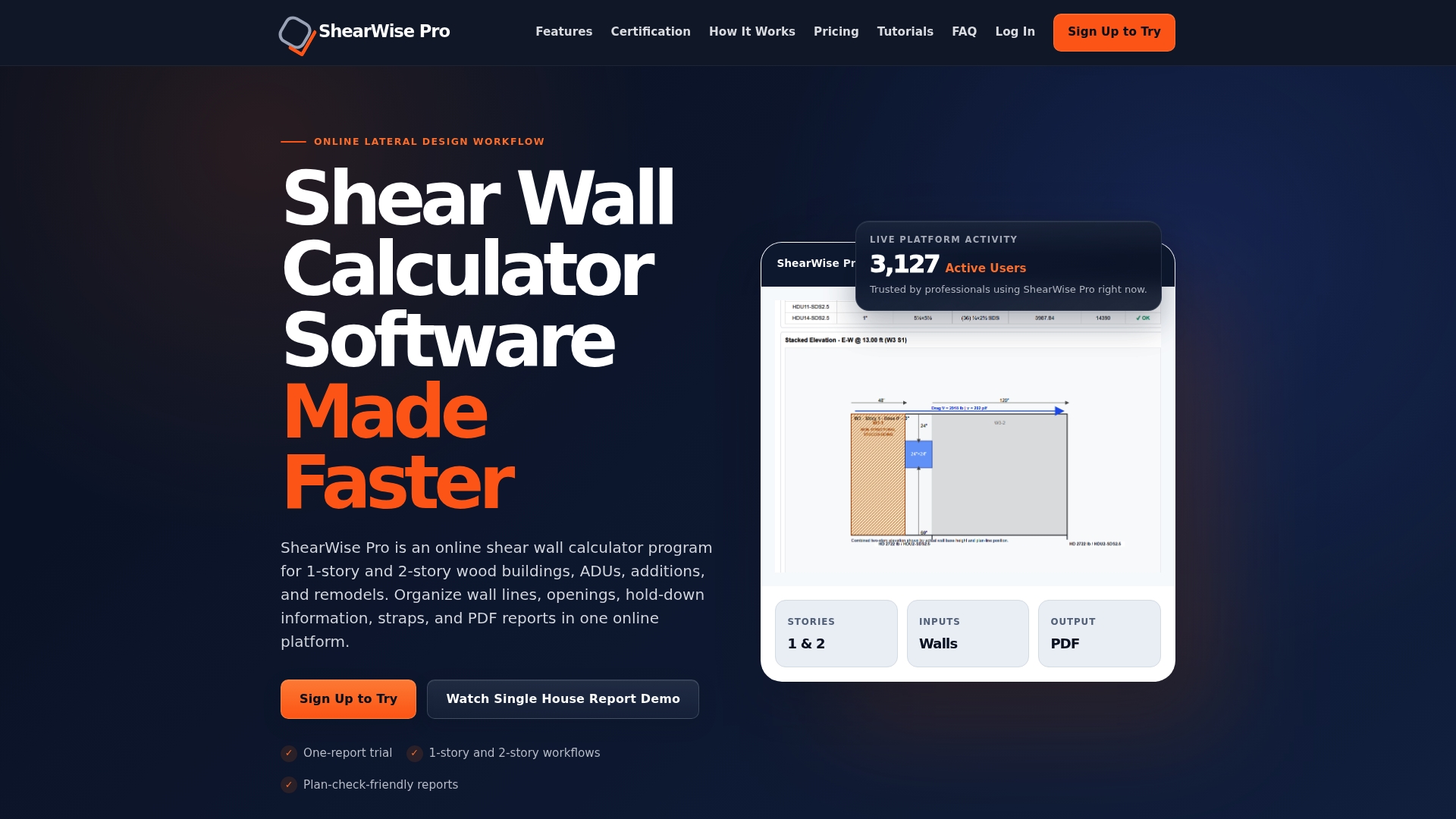
ShearWise Pro covers 1-story and 2-story wood-framed projects and includes story drift checks alongside diaphragm and segment calculations. You can review a sample ShearWise report to see the report format before signing up. Training videos are available at ShearWise Tutorials for teams getting started with the workflow. Sign up at shearwisepro.com/signup.html to try the platform on your next ADU project.
FAQ
What is a shear wall in a California ADU?
A shear wall is a wood structural panel wall engineered to resist lateral seismic and wind forces. California ADUs require shear walls as the primary lateral force-resisting system under the CBC and ASCE 7-22.
Does every California ADU need a structural engineer for shear walls?
Yes. ADUs in Seismic Design Category D require stamped shear wall calculations, nailing schedules, and hold-down details from a licensed structural engineer before the building department will approve the permit.
What is the minimum shear wall length required by the CBC?
The CBC sets a minimum full-height shear wall segment length of 2 feet. Hold-down anchors are required at each end of every qualifying segment to prevent overturning.
How do two-story ADUs change shear wall requirements?
Two-story ADUs carry higher cumulative seismic loads at the first story, requiring longer shear wall segments, heavier hold-down hardware, and more intensive nailing schedules compared to single-story units.
What causes most ADU shear wall plan check rejections in California?
The most common rejection triggers are incomplete hold-down specifications, missing transfer straps at floor levels, nailing schedule conflicts between structural and architectural sheets, and failure to address local CBC amendments.