
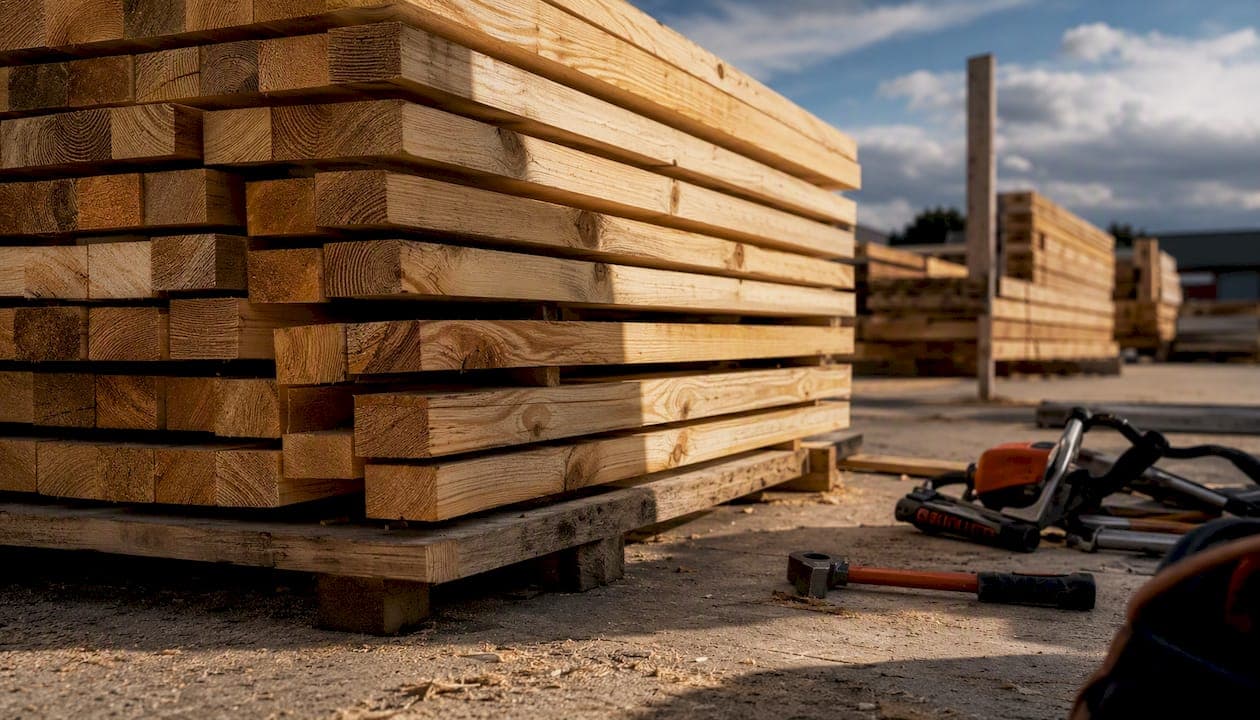
Non-pressure-treated wood is the right choice for most interior projects and many above-ground applications, but it will fail quickly in ground contact or unprotected structural exterior use. Here is the short version before you buy anything:
- Indoor framing, trim, cabinetry, and furniture: untreated lumber works well and costs less
- Above-ground exterior decking or fencing: acceptable only with naturally durable species (cedar, redwood, IPE, teak, cypress) or thermally modified wood, plus proper sealing and detailing
- Ground contact, structural posts, or foundation sill plates: untreated wood is not appropriate; pressure-treated or rated alternatives are required
- Playgrounds, garden beds, and furniture with frequent skin contact: untreated lumber is often the preferred choice because it avoids the chemical leaching risks associated with older pressure-treatment processes
Code matters here too. Most jurisdictions follow AWPA Use Class designations, and using the wrong material in a structural or ground-contact assembly can fail inspection or create a liability issue.
Key Takeaways
Non pressure treated wood is appropriate for interior use and above-ground exterior applications with naturally durable species or TMT, but it must never be used for ground contact or structural exterior roles without proper ratings.
| Point | Details |
|---|---|
| Use untreated indoors freely | Standard untreated lumber is the right choice for framing, trim, cabinetry, and furniture inside conditioned spaces. |
| Never use untreated in ground contact | Ground-contact and structural exterior applications require Use Class 4 pressure-treated lumber or a specifically rated alternative. |
| Species matter for outdoor use | Cedar, redwood, IPE, teak, and cypress offer natural durability above ground, but all require maintenance and proper detailing. |
| TMT is the chemical-free exterior option | Thermally modified wood improves decay resistance without preservatives; pre-drill and use compatible fasteners during installation. |
| Always check the lumber tag | Verify Use Class, species, and treatment level before purchasing; a missing tag is a red flag worth walking away from. |
Table of Contents
- What is non pressure treated wood, and where does it belong indoors?
- How does untreated wood compare to pressure-treated lumber?
- Which natural wood species hold up outdoors without chemical treatment?
- When can you use untreated wood outdoors, and what are the rules?
- What happens when untreated wood gets wet?
- How do you protect untreated wood and keep it performing?
- What are the best alternatives when untreated wood is not the right fit?
- How do you choose the right wood for your project?
- A builder's honest take on untreated wood
- Sources
What is non pressure treated wood, and where does it belong indoors?
Untreated lumber is wood that has not been infused with chemical preservatives. No copper compounds, no borates, no fungicides driven into the cellular structure under pressure. What you get is the natural wood, milled and dried, ready to cut and install.
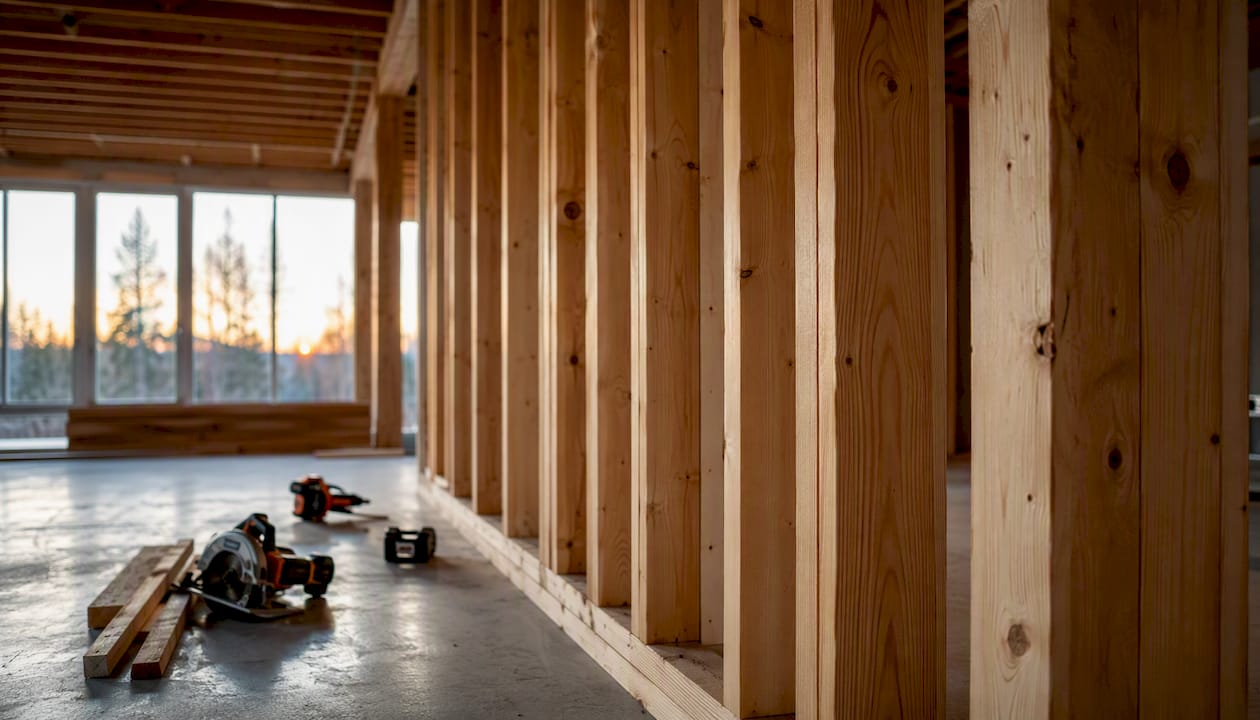
That simplicity is exactly why untreated lumber dominates interior construction. Wall studs, ceiling joists, blocking, interior trim, baseboards, door casings, cabinet boxes, shelving, and furniture frames are all standard applications. Inside a conditioned building, wood stays dry, temperatures stay moderate, and insects rarely reach structural members. Those conditions remove the primary threats that preservatives are designed to fight.
Cost is another real advantage. Untreated dimensional lumber typically runs noticeably cheaper per board foot than pressure-treated stock of the same species and dimension, which adds up fast on a full framing package. For interior solid-wood applications like doors and millwork, the tradeoffs between species and finish matter more than treatment.
From a health standpoint, untreated wood carries no leaching risk. Older pressure-treatment formulations used chromated copper arsenate (CCA), which raised legitimate concerns about arsenic transfer to skin and soil. Modern treatments use alkaline copper quaternary (ACQ) or copper azole, which are safer but still introduce copper compounds into the environment. Untreated wood sidesteps all of that, which is why builders and the EPA both recommend it for playgrounds and garden beds where soil or skin contact is frequent.
If your project involves load-bearing walls or lateral force resistance in a wood-framed building, material selection is only part of the equation. Engineering tools like ShearWise Pro help organize shear wall calculations, hold-down forces, and wall line layouts so structural decisions are documented and permit-ready from the start.
How does untreated wood compare to pressure-treated lumber?
The core difference is what happens to the wood before it reaches the lumberyard. Pressure-treated lumber is placed in a sealed cylinder, the air is removed, and a liquid preservative solution is forced deep into the wood fibers under pressure. Untreated lumber skips that process entirely.
That treatment changes several practical properties beyond just rot resistance. Freshly treated lumber often arrives at the site with elevated moisture content, which causes more movement and shrinkage as it dries. The copper-based preservatives in modern ACQ and copper azole treatments are also corrosive to standard steel fasteners, which means you need hot-dipped galvanized or stainless steel hardware throughout, or you will see staining and fastener failure within a few seasons.
| Attribute | Untreated lumber | Pressure-treated lumber |
|---|---|---|
| Best for | Interior framing, trim, furniture, above-ground finish work | Ground contact, structural posts, decking in wet climates, sill plates |
| Durability / expected lifespan | Decades indoors; a few years unprotected outdoors | Many years in ground contact with proper maintenance |
| Maintenance requirements | Seal and refinish periodically for exterior use; minimal indoors | Annual inspection, periodic re-sealing or staining |
| Cost | Lower per board foot | Higher; varies by treatment level and species |
| Chemical exposure / health concerns | None; no preservatives | Modern treatments (ACQ, copper azole) are lower risk than older CCA; still introduce copper compounds |
| Ground-contact or structural exterior suitability | Not suitable without naturally durable species or TMT | Required for ground contact and many structural exterior applications |
Industry guidance draws a further distinction between "pressure-treated" and "preservative-treated" lumber. Pressure-treated means deep chemical infusion for ground-contact and structural use. Preservative-treated covers lighter surface treatments used for exterior millwork and finish applications. Untreated lumber belongs in a third category: interior and above-ground finish work where moisture exposure is controlled.
The fastener point deserves emphasis. If you are building a deck with naturally durable species like cedar or IPE, you still need corrosion-resistant hardware. Stainless steel or hot-dipped galvanized fasteners are the standard recommendation. Plain steel screws will rust and stain the wood within one or two seasons, regardless of whether the lumber is treated or not.
Which natural wood species hold up outdoors without chemical treatment?
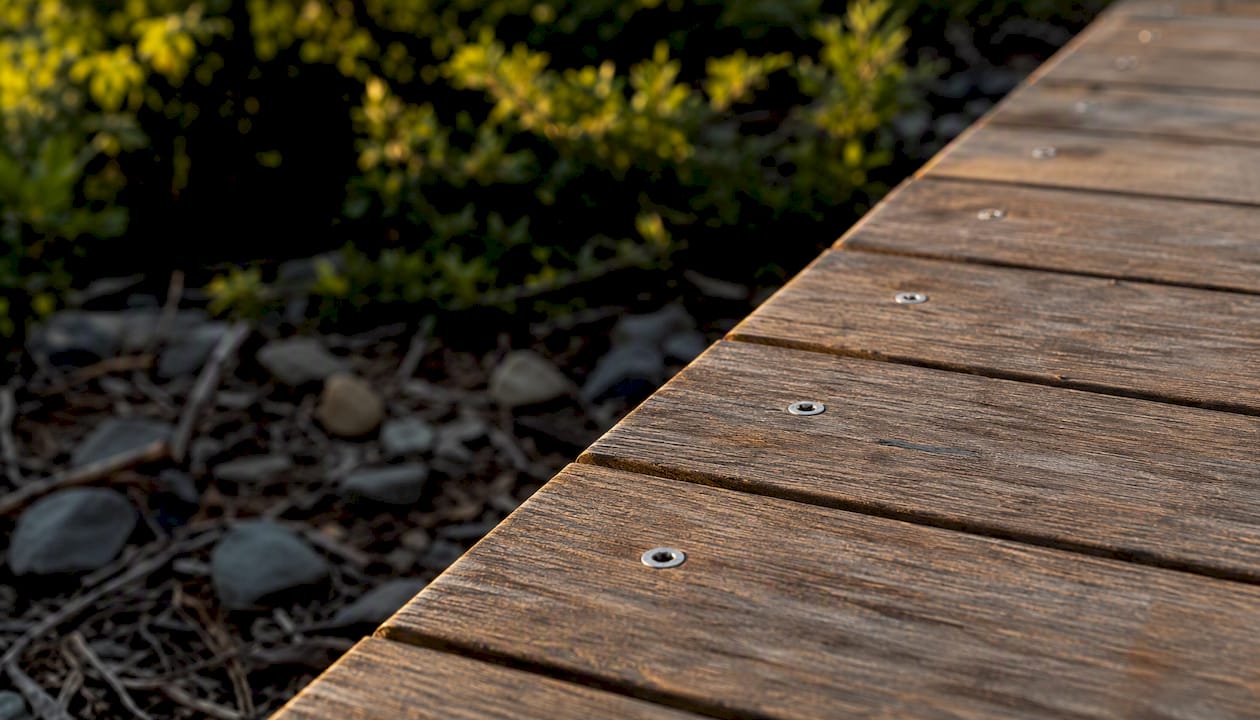
A handful of species carry enough natural extractives, oils, or density to resist decay and insects without pressure treatment. None of them are maintenance-free, and none are appropriate for direct ground contact in structural applications. But for above-ground decking, fencing, siding, and furniture, they are legitimate options.
-
Cedar (Western Red Cedar): The most widely available naturally durable softwood in the US. Its natural oils resist moisture and insects well. Best for decking, fencing, siding, and outdoor furniture. Expect a solid lifespan above ground with periodic sealing, though it will gray without a UV-protective finish. Relatively affordable compared to tropical hardwoods. No chemical concerns.
-
Redwood: Similar to cedar in natural durability, with a richer color and slightly better rot resistance in the heartwood. Common in California and the West Coast. Above-ground decking and garden structures are its sweet spot. Costs more than cedar in most US markets and is less available in the East. No chemical exposure issues.
-
IPE (Brazilian Walnut): A dense tropical hardwood with exceptional hardness and natural decay resistance. Rated for above-ground exterior use and commonly used for high-end decking and boardwalks. Lifespan above ground can be long with proper maintenance. The density that makes it durable also makes it harder to work with: pre-drilling is required, and standard fasteners will not drive cleanly. Cost is significantly higher than cedar or redwood. Sustainability sourcing varies, so look for FSC-certified stock.
-
Teak: Another dense tropical hardwood with high natural oil content that sheds water effectively. Classic choice for marine and outdoor furniture. Extremely durable above ground, but expensive and subject to the same FSC sourcing concerns as IPE. Teak's oils can also interfere with some adhesives and finishes, so surface prep matters.
-
Cypress: Naturally occurring cypressene oil gives old-growth cypress strong decay resistance. Availability has declined as old-growth stock is depleted, so much of what is sold today is second-growth cypress with lower natural oil content and reduced durability. Verify the source before specifying it for long-term exterior use.
-
Thermally modified wood (TMT): Not a species but a process. Wood is heated to high temperatures in a controlled, oxygen-free environment, which changes the cellular structure, reduces moisture absorption, and improves decay resistance without any chemical preservatives. Products like Americana thermally modified decking and SOLARWOOD from U.S. Lumber are marketed as chemical-free exterior options with improved dimensional stability. TMT is a strong choice for homeowners who want exterior performance without the chemical profile of pressure-treated lumber.
As Simonson Lumber notes, even these naturally durable species require maintenance and are not rated for ground-contact structural use. "Naturally durable" is not a code classification; it is a material property that still requires proper detailing to perform.
When can you use untreated wood outdoors, and what are the rules?
Untreated lumber is acceptable outdoors under specific conditions: the wood must be above ground, well-drained, not in direct soil contact, and either a naturally durable species or thermally modified. For any load-bearing or structural exterior element, check your local building code and the lumber's Use Class designation before you build.
Code caution: The AWPA Use Class system defines which treatment level a wood product needs based on its exposure and structural role. Use Class 1 covers interior dry use. Use Class 2 covers interior damp use. Use Class 3 covers above-ground exterior use. Use Class 4 covers ground contact. Untreated lumber is appropriate only for Use Class 1 and, with naturally durable species or TMT, some Use Class 3 applications. Never use untreated standard lumber for Use Class 4 without verifying species ratings and local code.
Follow this checklist when installing untreated or naturally durable wood in an above-ground exterior application:
- Confirm the species or treatment rating. Verify the lumber tag or mill certificate. Cedar, redwood, IPE, teak, and TMT products have documented durability ratings; generic "untreated" pine or spruce does not.
- Select corrosion-resistant fasteners. Use stainless steel or hot-dipped galvanized screws and hardware. Electroplated zinc fasteners are not adequate for exterior exposure.
- Space boards for drainage. Leave a 1/8-inch to 1/4-inch gap between deck boards to allow water to drain and air to circulate. Standing water accelerates decay even in durable species.
- Seal all cut ends immediately. End grain absorbs moisture far faster than face grain. Apply a penetrating end-grain sealer or exterior wood preservative to every cut before installation.
- Install flashing at ledger connections. Any point where wood meets a house wall or concrete needs proper flashing to prevent water infiltration behind the assembly.
- Keep wood off soil and concrete. Maintain at least 6 inches of clearance between wood framing and grade. Use post bases or standoffs to lift posts above concrete footings.
- Apply a UV-protective finish or sealant before first exposure. Even naturally durable species benefit from an initial coat of penetrating oil, water repellent, or exterior stain to slow weathering.
Pro Tip: When working with TMT or dense tropical hardwoods like IPE, always pre-drill fastener holes. Both materials are more brittle than standard softwoods, and driving screws without pilot holes will split the board or snap the fastener head.
What happens when untreated wood gets wet?
Moisture is the primary enemy of untreated wood in exterior conditions. When standard untreated lumber gets wet repeatedly without drying out, the failure sequence is predictable: first warping and cupping, then checking and cracking, then biological decay, and finally structural loss.
The timeline depends heavily on exposure. Untreated pine or spruce left in direct contact with wet soil can show visible rot within one to two years. Above ground but unprotected in a rainy climate, surface checking and cupping can appear within a single season. In a dry climate with good drainage and occasional rain, the same wood might last five years or more before decay becomes a structural concern. Sealed and maintained above-ground installations using naturally durable species can perform for decades.
Watch for these specific failure modes during inspections:
- Cupping and warping: boards curve across their width as moisture content changes unevenly between faces
- Checking: surface cracks along the grain as the wood dries and expands repeatedly
- Biological decay (rot): soft, discolored, or punky wood, often with a musty smell; most common at end grain, joints, and areas with poor drainage
- Fungal staining: blue-black discoloration from mold or sapstain fungi, which does not always indicate structural decay but signals chronic moisture
- Fastener loosening: as wood swells and shrinks, fastener grip weakens and connections loosen over time
- Insect damage: termites and wood-boring beetles target moist, decaying wood; look for small holes, frass (sawdust-like debris), or hollow-sounding boards
Catching these early, before they reach structural members, is the difference between a simple board replacement and a full deck rebuild.
How do you protect untreated wood and keep it performing?
Protection starts before installation and continues on a regular schedule. The goal is to slow moisture absorption, block UV degradation, and catch problems before they become expensive.
Initial protection:
- Apply a penetrating water repellent or exterior wood oil before or immediately after installation
- Seal all cut ends with an end-grain sealer; this step is skipped more often than any other and causes the most premature failures
- Prime and paint or stain any wood that will be painted; bare wood exposed to sun degrades the paint bond within one season
Ongoing maintenance schedule:
- Annually: inspect all surfaces, joints, and fastener points for rot, checking, or loosening; re-tighten or replace fasteners as needed
- Every 1–3 years: reapply a penetrating oil, water repellent, or exterior stain depending on the finish system and exposure level; higher sun and rain exposure requires more frequent recoating
- After any major storm: check for standing water, debris accumulation, and any boards that have shifted or lifted
Fastener and hardware choices:
- Stainless steel (Type 304 or 316) for coastal or high-moisture environments
- Hot-dipped galvanized for standard exterior use; avoid electroplated zinc, which corrodes quickly
- Hidden fastener systems for decking reduce surface water pooling and improve appearance
Design details that reduce maintenance burden:
- Slope deck surfaces slightly (1/8 inch per foot) to shed water
- Use drip edges and flashing at all wall connections
- Keep wood at least 6 inches above grade and away from mulch or soil
- Choose a darker stain or oil finish rather than a clear coat; pigmented finishes block UV more effectively and last longer between recoats
For interior applications like solid-wood doors, the right finish and species pairing matters as much as the wood itself.
What are the best alternatives when untreated wood is not the right fit?
When untreated lumber cannot meet the exposure or structural requirements of your project, four categories of alternatives cover most situations.
Pressure-treated lumber remains the standard for ground contact, structural posts, deck framing, sill plates, and any application where Use Class 4 is required. Modern ACQ and copper azole treatments are significantly safer than the older CCA formulations phased out in 2003. The tradeoff is corrosive chemistry that requires compatible fasteners and limits use near edible gardens or children's play areas.
Thermally modified wood (TMT) is the strongest chemical-free alternative for exterior decking and cladding. The heat modification process reduces the wood's ability to absorb moisture, which improves dimensional stability and decay resistance without introducing any preservative chemicals. It is a practical choice for homeowners who want exterior performance without the chemical profile of pressure-treated lumber, and it is increasingly available through specialty lumber suppliers. Installation requires pre-drilling and compatible fasteners because TMT is more brittle than unmodified wood.
Composite decking (wood-plastic composite or PVC-based) eliminates the maintenance cycle almost entirely. No sealing, no staining, no rot. The tradeoff is a higher upfront cost, a different aesthetic than natural wood, and heat retention in direct sun. For low-maintenance decks and railings, composites are hard to beat on a 20-year cost basis.
Naturally durable hardwoods (IPE, teak, cumaru) offer the longest above-ground lifespan of any wood option but at the highest cost and with the most demanding installation requirements. They are best suited for high-visibility projects where longevity and appearance justify the investment.
For structural exterior framing where lateral loads are a concern, material selection is only part of the decision. Reviewing wood framing lateral systems alongside your material choice helps confirm that the assembly performs as designed under code-required loads.
How do you choose the right wood for your project?
Work through this decision process before you buy anything. The wrong material is expensive to fix after installation.
- Define the exposure and load. Is the wood indoors or outdoors? Above ground or in contact with soil? Is it structural (load-bearing) or finish work? Answering these three questions narrows your options immediately.
- Check the lumber tag and Use Class. Every piece of treated lumber should carry a tag showing the treatment type, retention level, and Use Class. Match the Use Class to your application. If there is no tag, ask for documentation or choose a different supplier.
- Choose species or treatment level. For interior use, standard untreated lumber is fine. For above-ground exterior use with naturally durable species, verify the species and heartwood content. For ground contact or structural exterior, Use Class 4 pressure-treated lumber is the baseline.
- Select compatible fasteners and finishes. Corrosion-resistant hardware is non-negotiable for any exterior application. Confirm finish compatibility with your chosen species, especially for oily tropical hardwoods.
- Estimate total cost including maintenance. A cheaper board that requires annual sealing and replacement in five years often costs more over a decade than a durable species or composite that needs less attention.
Questions to ask at the lumberyard:
- What is the Use Class rating on this material?
- What species is this, and is it heartwood or sapwood?
- What is the current moisture content?
- What fasteners and finishes does the manufacturer recommend?
- Is there a treatment warranty or mill certificate available?
Red flags: no lumber tag, no species identification, moisture content above 19% for interior framing, or a supplier who cannot answer basic Use Class questions.
For load-bearing walls and structural framing decisions, a permit-ready lumber check through an engineering tool like ShearWise Pro adds a layer of documentation that protects you at inspection. If your project involves shear walls or lateral load paths, the ShearWise Pro shear wall calculator organizes those calculations into clean PDF reports for permit submission.
A builder's honest take on untreated wood
The most common mistake DIYers make is not choosing the wrong species. It is choosing the right species but skipping the detailing. Cedar decks fail at the ledger board. IPE splits because nobody pre-drilled. Cypress rots at the post base because the post sat directly on concrete. The wood gets blamed, but the installation is usually the problem.
My recommendation is straightforward: use untreated lumber inside without hesitation. For above-ground exterior work, pick a naturally durable species or TMT, seal the end grain, use the right fasteners, and build in drainage from the start. Never put untreated standard lumber in ground contact or in a structural role that requires a Use Class 4 rating. Those are not judgment calls; they are code requirements.
The second most common mistake is skipping the engineer on projects that need one. If you are adding a deck to a two-story house, building a room addition, or modifying a load-bearing wall, material selection and structural design are separate questions. Get both right.
Sources
These resources cover the technical and regulatory details behind the guidance in this article:
- Overview of wood preservative chemicals — EPA
- AWPA — American Wood Protection Association
- Americana™ Thermally Modified Decking