
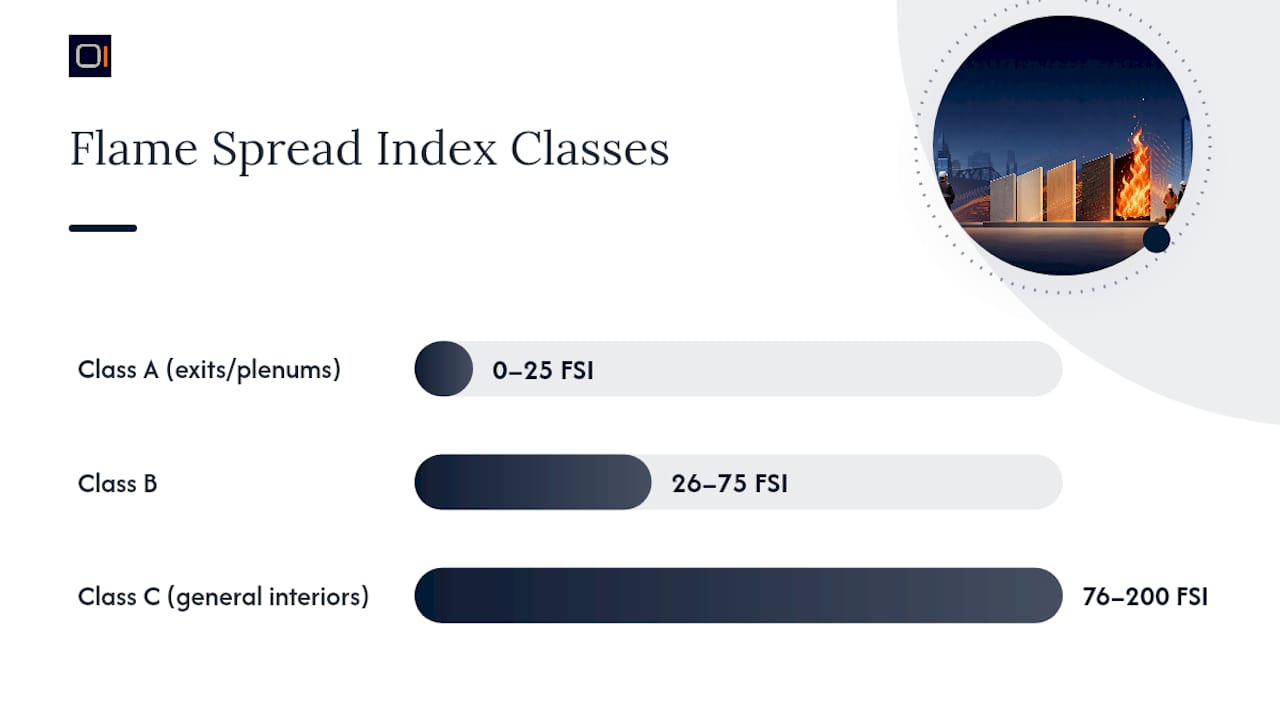
The Flame Spread Index (FSI) is a dimensionless number generated by the ASTM E84 (also published as UL 723) tunnel test, and it sorts interior finish materials into Class A, B, or C for code compliance. Class A covers FSI 0 to 25, Class B covers 26 to 75, and Class C covers 76 to 200. Every one of those classes also carries a Smoke Developed Index (SDI) ceiling of 450, so a material can post a low flame spread number and still fail classification on smoke output. Engineers and specifiers lean on these numbers daily, but the IBC and NFPA reference the same ASTM E84/UL 723 test data when assigning finish requirements to a project.
A few things to keep straight before you dig into a submittal:
- FSI has no units. It is a relative comparison, not a measured speed or distance.
- Class A (0-25) is the most restrictive band and shows up in exits, stairwells, and other high-occupancy paths.
- SDI 450 or lower applies across all three classes, not just Class A.
Key Takeaways
The Flame Spread Index sorts materials into Class A, B, or C based on ASTM E84/UL 723 tunnel test results, but it measures surface burning only, not fire resistance or assembly performance.
| Point | Details |
|---|---|
| Know the class thresholds | Class A is 0-25 FSI, Class B is 26-75, Class C is 76-200, all capped at SDI 450. |
| Check the reference scale | FSI is relative to red oak (100) and cement board (0), not a direct spread rate. |
| Match code location to class | Exits and plenums typically demand Class A; general interiors often allow Class C. |
| Request NFPA 286 when needed | Complex assemblies or non-traditional materials call for room-growth testing. |
| Verify assembly, not just material | Adhesives, backing, and fasteners can change real-world performance from the tested sample. |
Table of Contents
- What Is the ASTM E84 / UL 723 Test and How Does It Work?
- Class A, B, and C: What the Numbers Actually Mean
- How Building Codes Apply Flame Spread Classes
- Where the Tunnel Test Falls Short
- How to Specify and Review Flame Spread Data
- Common Misconceptions About Flame Spread Ratings
- A Structural Engineer's View on Fire Classification
- Frequently Asked Questions
- Sources
What Is the ASTM E84 / UL 723 Test and How Does It Work?
The Steiner tunnel test, formalized as ASTM E84 and functionally identical to UL 723, runs a 24 foot long, 20 inch wide specimen mounted horizontally as the ceiling of a fire tunnel. A gas flame ignites one end, and the test runs for 10 minutes while instruments track how far the flame front travels and how much smoke the material produces along the way.
Those raw measurements get converted into two separate numbers: the Flame Spread Index and the Smoke Developed Index. Neither one is a direct physical unit. Both are calculated against a fixed reference scale.
- Specimen: 24 feet long, mounted along the tunnel ceiling, exposed to a gas burner at one end.
- Duration: 10 minutes, with flame position and smoke density recorded continuously.
- Output: two index numbers, FSI and SDI, both scaled against known reference materials.
Reference points matter here. The scale is anchored by inorganic reinforced cement board at 0 and select-grade red oak flooring at 100. Every FSI result on a manufacturer's data sheet is a comparison to those two fixed points, not an independent measurement of burn speed. ASTM E84 and UL 723 are treated as interchangeable by code officials, so you'll see either standard cited on a test report without any difference in what the numbers mean.
Class A, B, and C: What the Numbers Actually Mean
The three classes aren't arbitrary cutoffs. They map to how fast flame travels across a surface relative to red oak, and codes use them to decide where a material can go in a building.
- Class A: FSI 0-25, SDI ≤ 450. This is the band for materials with minimal surface flame propagation. Gypsum board, most noncombustible wall coverings, and many fire-retardant treated products land here.
- Class B materials have moderate flame spread and smoke developed indices within specified limits. A moderate flame spread rating. This is where a lot of mass timber interior finishes fall, along with treated wood products and select engineered panels, according to the American Wood Council's DCA 1 data.
- Class C: FSI 76-200, SDI ≤ 450. The least restrictive band still accepted by code for interior finish. Untreated wood paneling commonly tests in this range. An FSI of 150 falls squarely in Class C, which is acceptable for lower-risk interior applications but won't clear a stairwell or plenum requirement.
A lower FSI means the flame front moved a shorter distance across the sample in the 10 minute test window, so the material resists surface ignition and propagation better than something scoring higher. That said, every one of these numbers describes the tested sample only. Swap the backing, the adhesive, or the fastening pattern, and the assembly's real-world performance can shift away from what's printed on the data sheet.
How Building Codes Apply Flame Spread Classes
The IBC and NFPA don't run their own fire tests. They reference ASTM E84/UL 723 results directly and assign occupancy-based finish requirements from there. Where a material goes in a building depends heavily on what's nearby and who's likely to be inside.
- Exit paths, stairwells, and assembly spaces generally require Class A finishes, since these are the areas occupants depend on most during an evacuation.
- Mechanical plenums often require Class A or fully noncombustible materials, particularly for return-air paths.
- Ceilings frequently carry tighter limits than wall finishes, sometimes capped well below the general Class C threshold.
- Interior finishes in standard occupied spaces typically top out at FSI 200, per language mirrored in federal regulatory text that also restricts spaces adjacent to furnaces to FSI 25 or lower.
One code detail worth remembering: sprinkler protection can sometimes buy a building owner a less restrictive finish class than the base requirement, and acceptance can also come through NFPA 286 room-fire results instead of a straight ASTM E84 report. Neither exception is universal. Confirm both against the specific code edition governing your jurisdiction before assuming a workaround applies.
Where the Tunnel Test Falls Short
ASTM E84 tells you a lot, but it doesn't tell you everything, and knowing the gaps matters as much as knowing the numbers.
- The specimen is mounted horizontally, flame exposure hits the underside, and for thermoplastics that melt or drip, the material can pull away from the flame rather than sustain combustion, which can produce a misleadingly favorable FSI.
- The test evaluates a single material in isolation. It doesn't capture how that material behaves once it's fastened, adhered, or layered into a real assembly.
- FSI and SDI say nothing about fire resistance or how long an assembly holds structural integrity under fire exposure. Those are separate ratings entirely, tested under different standards.
For non-traditional materials, complex multilayer assemblies, or performance-based designs where the tunnel test's limits genuinely matter, NFPA 286 room-growth testing gives a far more realistic picture of how a finish behaves in an actual fire, including flashover potential across full-scale room geometry.
Pro Tip: If a submittal involves a material you can't find a long track record for in tunnel testing, ask for NFPA 286 data or assembly-level fire testing before you sign off. A Class A tunnel result on an untested assembly configuration isn't the same guarantee it looks like on paper.
How to Specify and Review Flame Spread Data
Getting the right number into your specification is only half the job. The other half is catching a mismatched or incomplete test report before it becomes an installed problem.
Specification language should require both ASTM E84 (or UL 723) results and NFPA 286 data where the occupancy or assembly complexity calls for it, and it should always require the SDI figure alongside the FSI, since a material can pass one and fail the other.
When you review a submittal, work through it in order:
- Confirm the test report date and check that it matches the current product formulation.
- Verify the sample configuration matches the specified thickness, backing, and finish.
- Check that the testing lab carries recognized accreditation.
- Compare the tested assembly against what's actually going on the wall or ceiling.
- Confirm both FSI and SDI values are reported, not just one.
Watch for these red flags: a report tested at a different thickness than what's being installed, missing SDI numbers, proprietary finishes with no assembly-level backup testing, and thermoplastic products with suspiciously low FSI scores that warrant a second look at test conditions. Documentation habits from other structural submittal reviews, like the ones covered in common shear wall design mistakes, apply here too: catch the mismatch on paper before it becomes a field problem.
Common Misconceptions About Flame Spread Ratings
Class A does not mean fireproof, and it says nothing about how long an assembly resists structural failure in a fire. FSI is a comparative index tied to one specific test setup, not an absolute rate you can convert into feet per minute.
Assembly components change outcomes. Adhesives, backing materials, and fasteners can all shift a finish's real performance away from its isolated test result.
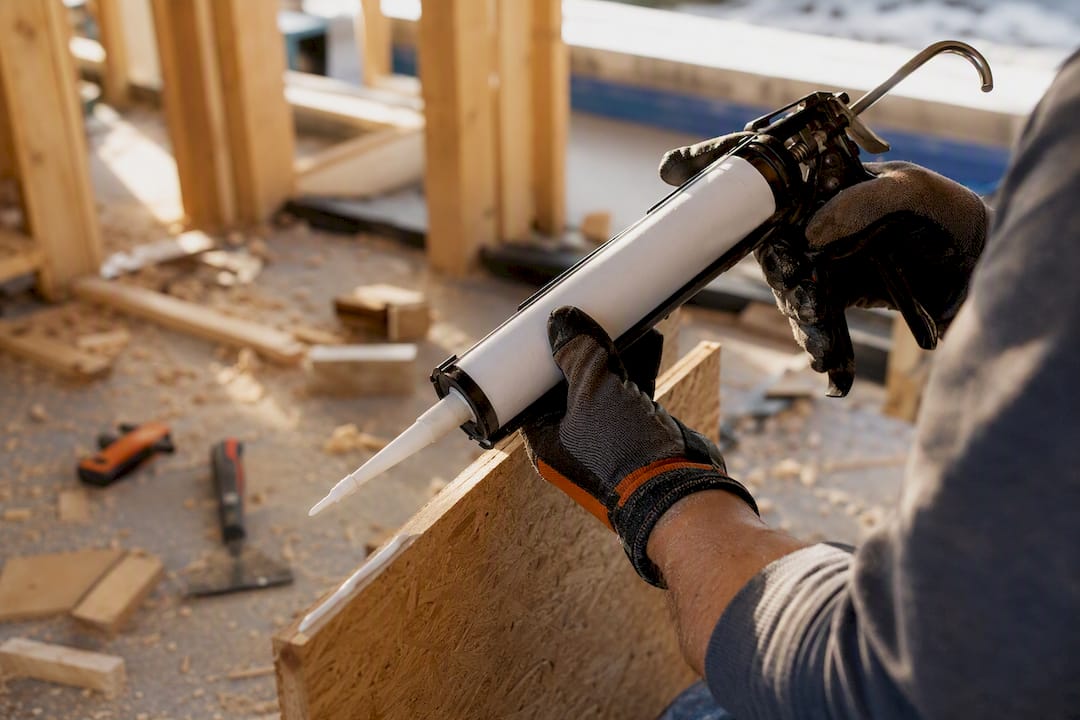
Pro Tip: Inspectors and reviewers should always ask for the tested assembly configuration, not just the material's standalone Class A claim, before accepting a submittal as compliant.
A Structural Engineer's View on Fire Classification
Code compliance sets the floor, not the ceiling, on finish selection. When a project pushes into performance-based territory, exposed mass timber, unusual assemblies, involve a fire protection engineer early rather than trying to make a tunnel test result do work it was never designed for. ShearWise Pro focuses on the structural side of wood-framed design, shear walls, hold-downs, and story drift, but the same discipline that goes into verifying assembly-level structural performance belongs in how you verify fire classification data.
Ready to bring that same rigor to your shear wall calculations? ShearWise Pro generates clean, report-ready PDF outputs for 1 and 2-story wood-framed projects, covering wall lines, hold-down forces, transfer straps, and story drift checks, so your structural documentation holds up to the same scrutiny as your fire-rated assemblies. Try it with three free watermarked reports before committing to a subscription. If you're weighing finish options that also affect wall assembly detailing, our breakdown of door choices for interior spaces from our partners at One Day Doors & Closets is worth a look too.
Frequently Asked Questions
What does a Flame Spread Index of 150 mean? An FSI of 150 places a material in Class C (76-200), the least restrictive band still accepted for general interior finishes under most codes, though it won't meet Class A requirements for exits or plenums.
Is a higher flame spread index better or worse? Worse. A higher FSI means flame traveled farther across the tested sample relative to the red oak reference, indicating faster surface flame propagation.
Does Class A mean a material is fireproof? No. Class A only reflects a low flame spread and acceptable smoke development in the ASTM E84 tunnel test. It says nothing about fire resistance, structural performance, or how the material behaves as part of an assembly.
When should I require NFPA 286 instead of ASTM E84? Request NFPA 286 for non-traditional materials, complex multilayer assemblies, or performance-based designs where actual room fire growth and flashover behavior matter more than a single-material tunnel result.
Are ASTM E84 and UL 723 the same test? They're functionally equivalent for surface burning characteristics, and code officials generally accept either standard's results interchangeably for interior finish classification.
Sources
Pull test reports referencing ASTM E84 or UL 723, and NFPA 286 for room-scale evaluation. Check IBC sections on interior finish and the American Wood Council's DCA 1 for wood species data. Always confirm lab accreditation and that the tested assembly matches your installed configuration.
- ASTM E84: Standard Test Method for Surface Burning Characteristics of Building Materials
- CFR § 3280.203 Establishment of flame spread rating
- Fire performance | USG
- Surface burning characteristics rating - Wikipedia